How to Diagnose Common AC Problems Before You Call a Pro
Is your AC acting up just as that summer heat wave rolls in? Or maybe the office feels stuffy and the vents are whispering instead of whooshing. Few things can throw a wrench in your day like a struggling HVAC system—especially when comfort is on the line.
At Jordan Heating & Air Conditioning, we know the feeling. And while some AC problems need a pro, many can be spotted or even resolved with a little know-how. Let’s walk through straightforward steps to help you understand what’s up with your system—and when it’s time to dial for help.
Top AC Problems and Their Symptoms 🛑
Before you grab the toolbox, let’s look at the most common air conditioner complaints. Recognizing these early can save you time, money, and a lot of sweat.
- Unit not cooling: The air feels lukewarm, or the temperature never drops, no matter how low you set the thermostat.
- Unusual noises: Rattling, banging, or screeching—think of your AC as a car. Odd sounds usually mean something’s loose, stuck, or worn out.
- Frequent cycling: AC turns on and off rapidly—a bit like a light flickering. This can signal thermostat issues, electrical problems, or a dirty filter.
- Water leaks: Puddles or drips near your indoor unit point to clogs or drainage issues.
- Weak airflow: Vents barely push any air, causing some rooms to feel stuffy while others are fine.
These are the red flags. If you spot one, don’t panic—many have simple causes.
Step-by-Step Troubleshooting Checklist
Let’s get hands-on. Here’s a safe, practical way to diagnose basic AC issues at home or work.
1. Check the Thermostat
- Is it set to “cool”?
- Is the temperature lower than the room temp?
- Are the batteries fresh (if it’s battery-operated)?
A dead thermostat can trick you into thinking the whole system’s failed.
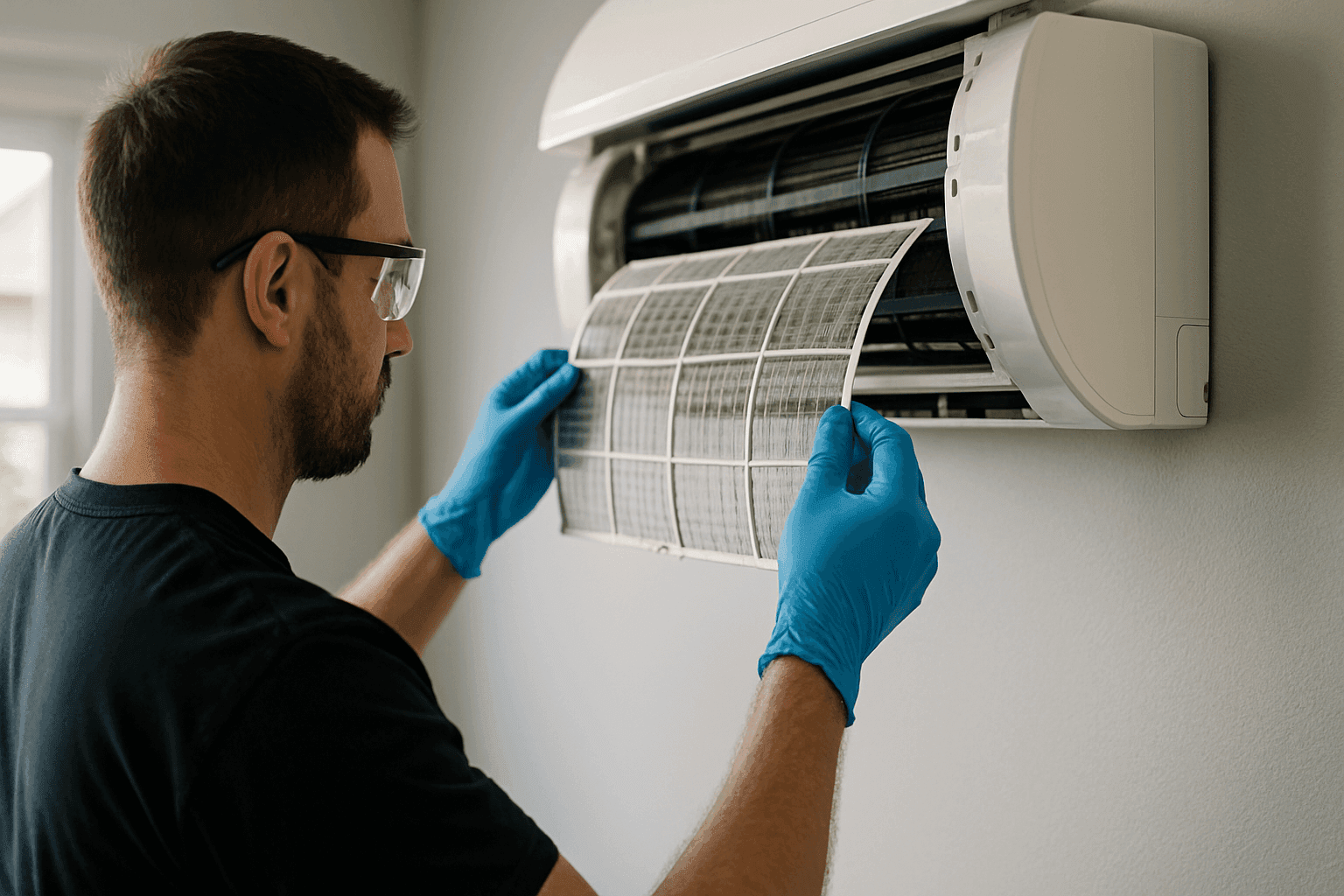
2. Inspect the Air Filter
A clogged filter is like trying to breathe through a scarf. It slows air, strains the unit, and can cause short cycling.
- Turn off your system.
- Slide out the filter (usually behind a grille or in the furnace).
- If it’s gray and dusty, replace it. Most filters should be changed every 1–3 months.
3. Check the Circuit Breaker
A tripped breaker is a common culprit—especially after power surges.
- Find your electrical panel.
- Look for any tripped switches (they’ll be in the middle, not fully ON or OFF).
- Flip the AC breaker OFF, then ON again.
If it trips repeatedly, stop here and call a professional—this could be a sign of a dangerous electrical issue.
4. Inspect Vents and Registers
Blocked vents are like blocked arteries—nothing gets through.
- Make sure furniture, drapes, or boxes aren’t covering vents.
- Open all supply and return vents for even airflow throughout the space.
5. Look for Visible Blockages or Leaks
- Check the indoor unit and condensate drain pan for standing water.
- Look outside: is the condenser blocked by leaves, trash, or landscaping?
- Remove obstructions, but don’t open sealed panels or electrical boxes.
When DIY Isn’t Enough
Some problems shouldn’t wait or be handled without proper training. Here’s when it’s time to step back and call in a pro—fast.
- Burning or electrical smells: Like burnt plastic or wires. Shut off the system immediately.
- Visible refrigerant leaks: Refrigerant is hazardous. Only licensed HVAC technicians can handle it safely per EPA guidelines.
- Repeated breaker trips: Could indicate a wiring short or compressor failure. Risk of fire or equipment damage.
- No power at all: If nothing happens after all checks, the issue may be deeper in the system’s wiring or controls.
Your safety isn’t worth the risk. HVAC systems are powerful—just like any major appliance, they demand respect.
Preventing Future AC Issues 🧰
The best fix is sometimes the one you never need. A little routine care can keep your system humming through the hottest days.
- Change air filters regularly: Every 1–3 months for most homes or offices.
- Keep outdoor units clear: Trim shrubs, rake away leaves, and never stack items on top.
- Schedule annual maintenance: A professional tune-up catches small problems early and keeps the system efficient.
- Monitor humidity: Use a dehumidifier or humidifier as needed. Balanced humidity helps your AC run better.
- Consider IAQ (Indoor Air Quality) testing: Especially in commercial settings or if you notice dust, allergy flare-ups, or odors.
Preventative maintenance pays off in fewer breakdowns, lower bills, and cleaner, healthier air.
Costs & Time Factors
DIY fixes—like filter changes or vent checks—cost little more than your time and a few dollars for supplies. But professional repairs can vary, depending on what’s wrong:
- Simple repairs: Thermostat replacements or minor electrical fixes are usually quick—often finished in under an hour.
- Major repairs: Refrigerant leaks, compressor issues, or blower motor replacements may take several hours to a full day.
- Emergency service: After-hours calls or commercial system repairs may cost more due to labor and urgency.
Remember: Delaying repairs can lead to bigger, more expensive problems down the road.
When It’s an Emergency
Certain symptoms mean it’s time to stop troubleshooting and call for immediate help—no exceptions:
- Smoke, sparks, or burning odors
- Flooding or significant leaks around the unit
- Repeated electrical failures
- System won’t power on after reset
In these cases, turn off your HVAC system at the thermostat and breaker if it’s safe to do so, then call for professional emergency service. The safety of your family, staff, and property comes first.
FAQ: AC Troubleshooting
How often should I change my air filter?
For most homes, every 1–3 months. Pet owners or allergy sufferers may need to change filters more often.
Why is my AC running but not cooling?
Could be a dirty filter, low refrigerant, or thermostat issue. Check the basics, then call for help if the problem persists.
Is duct cleaning near you really necessary?
Dirty ducts can lower air quality and restrict airflow. The EPA recommends cleaning only when there’s visible mold, excessive dust, or signs of pest infestation.
Can I use any filter in my AC?
Always use the size and type recommended by your system’s manufacturer. The wrong filter can reduce efficiency or cause damage.
Local & Seasonal Considerations 🌡️
Whether you’re bracing for a humid summer or a dusty spring, local conditions play a big role in AC performance. Pollen, construction debris, and even wildfire smoke can clog filters faster than usual. Scheduled maintenance becomes even more important during peak seasons.
If you run a business, consider quarterly checks—especially in high-traffic or high-dust environments. For homes, add filter reminders to your calendar.
Stay ahead. A well-cared-for HVAC system is your best defense against unexpected breakdowns.
If your AC is still acting up after these checks, don’t sweat it. Call Jordan Heating & Air Conditioning now — or reach us anytime at 855-552-2569 . Our licensed team is ready with safe, reliable solutions for every kind of HVAC challenge.